
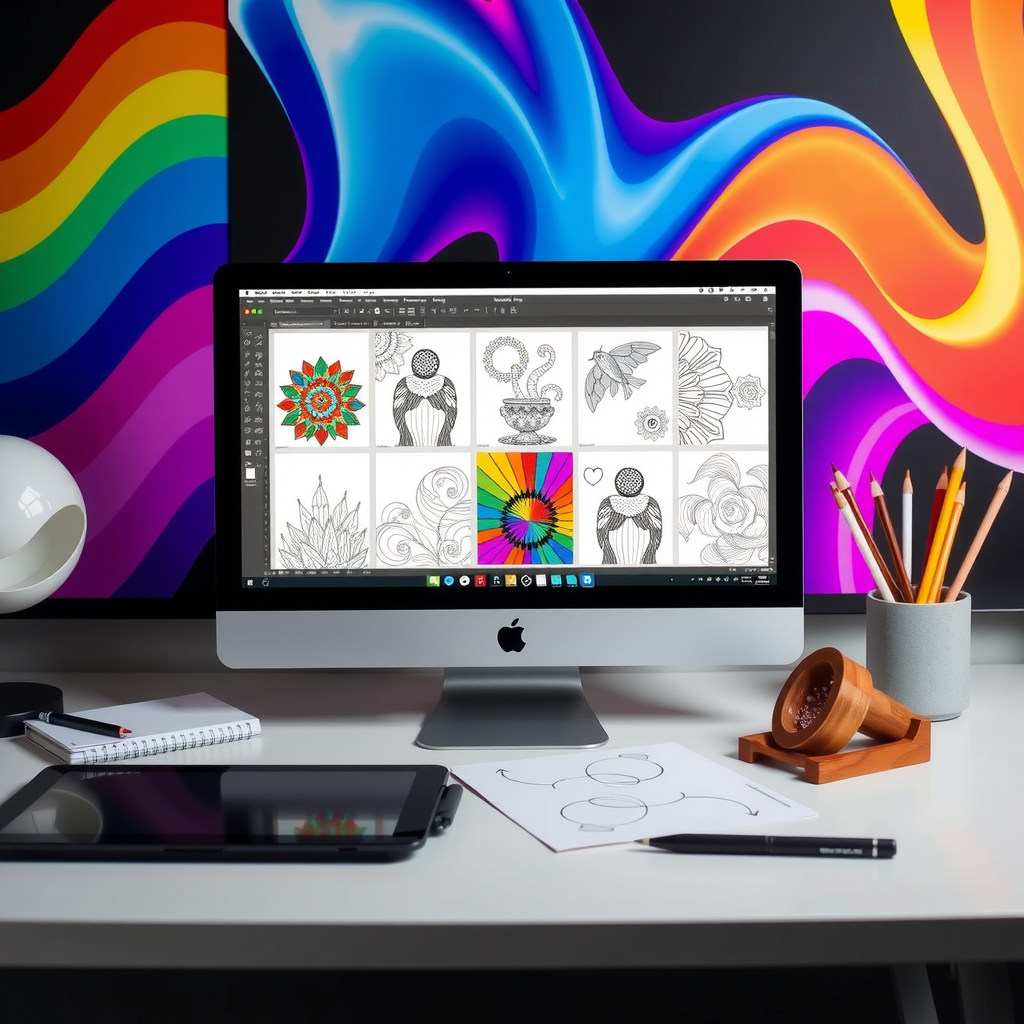
In the rapidly evolving landscape of digital creativity in 2026, artificial intelligence (AI) has become an indispensable tool for artists, writers, and entrepreneurs alike. One of the most exciting applications of AI today is its ability to help transform simple ideas into fully realized products, such as coloring books, storybooks, and ebooks. Whether you’re an aspiring author, a professional illustrator, or a hobbyist looking to monetize your passion, leveraging AI can dramatically streamline your creative process and open new avenues for self-publishing. Coloring books remain a beloved form of entertainment and artistic expression, appealing to children and adults alike. The rise of AI-powered platforms now makes it easier than ever to create high-quality, customized coloring books without extensive artistic training. This comprehensive guide will walk you through the entire process—from conceptualizing your idea to publishing your finished coloring book—using AI tools. As of September 29, 2026, the potential for independent creators to produce and distribute their work has never been greater. Let’s explore how you can turn your unique ideas into captivating coloring books with the help of AI technology.
📑 Table of Contents
- 1. Understanding the Power of AI in Creative Publishing
- 2. Ideation: Crafting a Unique Concept for Your Coloring Book
- 3. Leveraging AI for Illustration and Design
- 4. Editing and Customizing AI-Generated Artwork
- 5. Designing the Layout and Structure of Your Coloring Book
- 6. Self-Publishing and Distribution Strategies in 2026
- 7. Legal Considerations and Copyright in AI-Generated Content
- 8. Tips for Enhancing Creativity and Productivity with AI
- 9. Future Trends: AI and the Evolution of Creative Publishing
Understanding the Power of AI in Creative Publishing
Artificial intelligence has revolutionized the way we approach creative projects. Today’s AI platforms can generate detailed illustrations, suggest design elements, and even assist with layout and formatting, all with minimal manual input. For coloring books, AI can produce a wide variety of line art styles—from simple, bold outlines suitable for young children to intricate, detailed designs for adult coloring enthusiasts.
AI-driven tools like Bsaiman provide users with the ability to input basic concepts or themes and receive high-quality images tailored to their specifications. This democratizes the creative process, allowing individuals without traditional art skills to produce professional-grade content. Moreover, AI can help you experiment with different styles, color schemes, and motifs rapidly, saving time and resources.
Understanding the capabilities and limitations of AI is crucial. While AI can generate stunning visuals, human oversight ensures that designs align with your vision and are suitable for coloring. Combining your ideas with AI-generated art creates a collaborative process that enhances creativity and efficiency.
Ideation: Crafting a Unique Concept for Your Coloring Book
The foundation of a successful coloring book is a compelling and distinctive concept. Start by identifying your target audience—children, teenagers, adults, or specific niche groups like mindfulness enthusiasts or fans of fantasy themes. Brainstorm ideas that resonate with your audience’s interests and passions.
Consider themes such as nature, animals, fantasy worlds, cultural motifs, or educational topics. Use AI tools to explore visual representations of these ideas. For example, input keywords like 'magical forest' or 'underwater city' into your AI platform to generate preliminary sketches or concepts.
Refining your idea involves research and creativity. Look at existing coloring books to identify gaps or underserved niches. Use AI to generate variations of your initial concept, helping you visualize how different themes might look. Remember, the more specific and vivid your idea, the easier it will be to create cohesive and engaging illustrations.
Leveraging AI for Illustration and Design
Once you have a clear concept, the next step is creating the illustrations. AI platforms like Bsaiman excel at transforming text prompts into detailed line art suitable for coloring books. You can describe the scene or object you want—such as 'a whimsical dragon flying over mountains'—and the AI will generate multiple versions.
To ensure the images are suitable for coloring, specify parameters like 'black and white line art' or 'simple outlines.' Experiment with different prompts and refine your inputs based on the outputs. It’s often helpful to iterate several times to get the perfect design.
In addition to generating individual illustrations, AI can assist with layout design, arranging images on pages, and even creating complementary backgrounds or borders. This automation accelerates the production process and enhances consistency across your coloring book.
Editing and Customizing AI-Generated Artwork
AI-generated images are a fantastic starting point, but they often require human touch-ups to meet professional standards. Use graphic editing software like Adobe Illustrator, Photoshop, or free alternatives such as Inkscape and GIMP to clean up lines, adjust compositions, and add personal details.
Customizing AI art allows you to maintain a unique style and ensure that the illustrations align with your vision. Focus on enhancing line clarity, removing artifacts, and ensuring that designs are suitable for coloring—meaning they have clear outlines and appropriate spacing.
If you lack graphic editing skills, consider collaborating with freelance illustrators or using AI-powered editing tools that can simplify the process. Remember, high-quality, polished images will make your coloring book more appealing and professional.
Designing the Layout and Structure of Your Coloring Book
A well-organized layout enhances the user experience and makes your coloring book more enjoyable. Decide on the number of pages, the sequence of illustrations, and any additional elements such as titles, instructions, or fun facts.
AI tools can assist in creating consistent page layouts, including borders, page numbers, and spacing. Use templates or design your own layout to ensure a cohesive look throughout the book.
Consider adding variety—such as themed pages, blank spaces for creativity, or activity sections—to keep users engaged. Pay attention to margins, bleed areas, and overall readability. The goal is a polished, user-friendly product that invites coloring and creativity.
Self-Publishing and Distribution Strategies in 2026
With your coloring book ready, the next step is publishing and distribution. Self-publishing platforms like Amazon Kindle Direct Publishing (KDP), IngramSpark, or niche art marketplaces are popular options in 2026.
Optimize your book’s metadata—title, description, keywords, and categories—to improve discoverability. Use SEO best practices to attract your target audience. Since the digital landscape is highly competitive, consider marketing strategies such as social media promotion, collaborations with influencers, and targeted advertising.
AI tools also assist in creating marketing materials, including promotional images, social media posts, and even personalized landing pages. Additionally, explore distribution channels beyond traditional outlets, such as your own website or AI-powered print-on-demand services, to reach a broader audience.
Legal Considerations and Copyright in AI-Generated Content
As AI-generated content becomes more prevalent, understanding legal aspects is vital. Ensure that the AI platform you use grants you full rights to the images produced, especially if you plan to sell or distribute your coloring book.
Be aware of copyright laws related to derivative works and intellectual property. Some AI tools may have restrictions on commercial use or require attribution. Always review the terms of service and licensing agreements.
To protect your work, consider registering your coloring book with copyright authorities, especially if it contains unique artwork or concepts. Staying informed about legal developments in AI-generated content will help you avoid potential disputes and ensure your creations are protected.
Tips for Enhancing Creativity and Productivity with AI
Maximizing the potential of AI in your creative process involves strategic planning and experimentation. Set clear goals for each project, including style, theme, and target audience. Use AI to generate multiple options quickly, then select and refine the best designs.
Develop a workflow that combines AI tools with traditional techniques—sketching, editing, and storytelling—to enrich your coloring book. Regularly explore new AI features, updates, and community resources to stay ahead.
Time management is crucial; allocate specific periods for ideation, creation, editing, and marketing. Embrace feedback from peers or potential users to improve your designs and overall product quality.
Future Trends: AI and the Evolution of Creative Publishing
Looking ahead, AI will continue to transform creative publishing in unprecedented ways. Expect advancements in personalized content, where AI tailors coloring books to individual preferences or learning needs. Augmented reality (AR) integration may enable interactive coloring experiences, blending digital and physical art.
Furthermore, AI-driven analytics can help creators understand market trends and consumer preferences, guiding future projects. The rise of collaborative AI platforms will foster community-driven content creation, democratizing artistic expression.
As of September 29, 2026, embracing these trends will be essential for creators aiming to stay competitive and innovative. Continuous learning and adaptation will unlock new creative horizons and business opportunities.
✨ Conclusion
Transforming an idea into a captivating coloring book has become more accessible than ever, thanks to the powerful capabilities of AI technology. By understanding your audience, leveraging AI for illustration and design, and navigating the self-publishing landscape, you can turn your creative visions into reality with efficiency and professionalism. As we continue into 2026, the fusion of human imagination and artificial intelligence promises limitless possibilities for independent creators. Whether you're looking to share joy, educate, or inspire, AI provides the tools to bring your coloring book ideas to life and reach a global audience.