
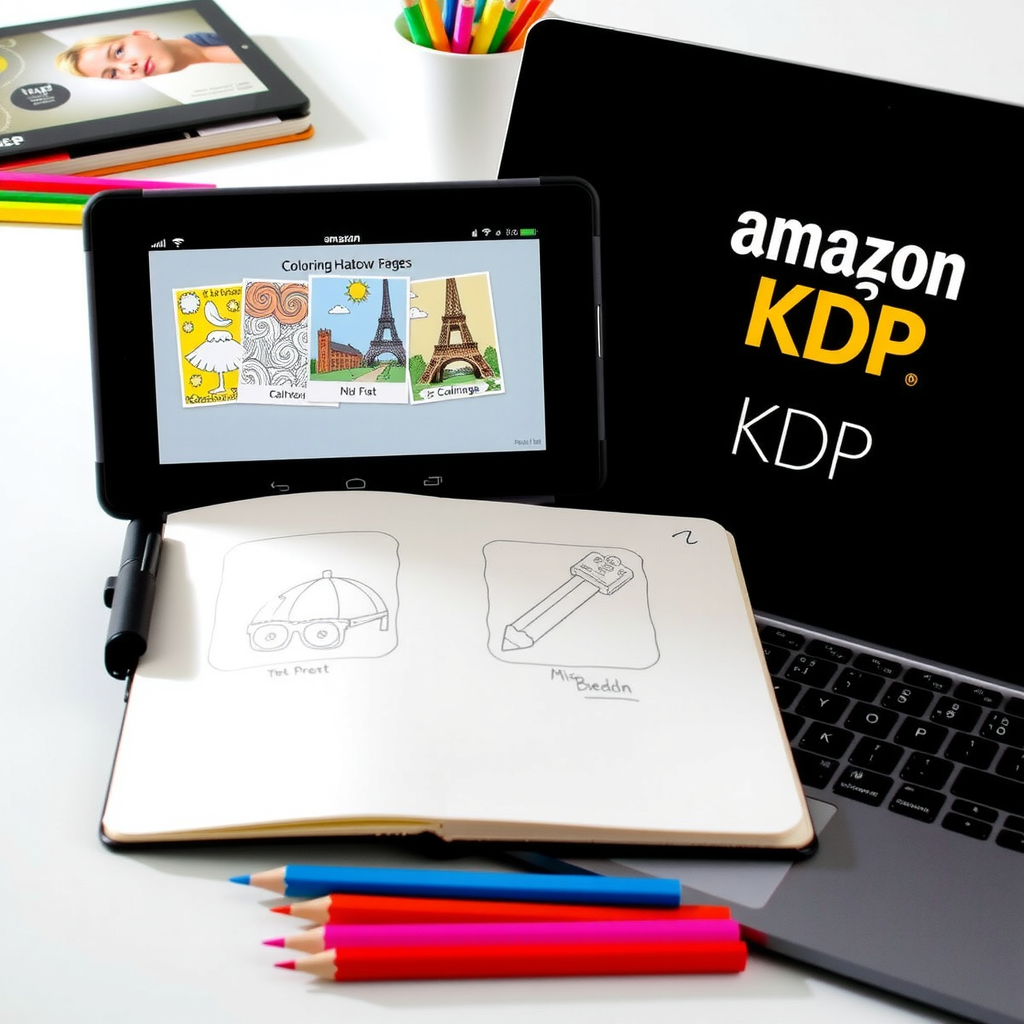
Creating and publishing a coloring book on Amazon Kindle Direct Publishing (KDP) has become an increasingly popular way for artists, educators, and entrepreneurs to generate passive income while sharing creative content with a global audience. As of September 29, 2026, the self-publishing landscape continues to evolve, offering more accessible tools and streamlined processes for independent publishers. Coloring books are not just for children anymore; they have gained popularity among adults seeking relaxation, mindfulness, and artistic expression. This dual demand creates a lucrative opportunity for creators to tap into diverse markets. However, success in publishing a coloring book on Amazon KDP requires more than just uploading some drawings. It involves strategic planning, high-quality design, proper formatting, and understanding Amazon's publishing guidelines. This comprehensive guide will walk you through every step of creating a professional, appealing coloring book—from initial concept development to publishing and marketing—so you can confidently bring your vision to life and reach thousands of potential customers worldwide.
📑 Table of Contents
- 1. Understanding Amazon KDP and the Coloring Book Market
- 2. Concept Development and Niche Selection
- 3. Designing Your Coloring Pages: Tools and Techniques
- 4. Formatting Your Coloring Book for Amazon KDP
- 5. Publishing Your Coloring Book on Amazon KDP
- 6. Marketing Strategies for Your Coloring Book
- 7. Scaling Your Coloring Book Business
- 8. Legal and Copyright Considerations
- 9. Tools and Resources for Creating Coloring Books
- 10. Common Mistakes to Avoid When Publishing Coloring Books
Understanding Amazon KDP and the Coloring Book Market
Before diving into the creative process, it's essential to understand the platform you'll be using—Amazon Kindle Direct Publishing—and the current market dynamics for coloring books. Amazon KDP is a print-on-demand service that allows authors and artists to publish books without upfront inventory costs. Your coloring book will be available as a paperback, printed when customers place orders.
The coloring book market has expanded significantly over the past decade. While children's coloring books remain popular, adult coloring books have surged in popularity due to their stress-relief benefits. Niche markets, such as themed coloring books (e.g., mindfulness, fantasy, animals), provide opportunities for targeted marketing.
Analyzing competitors on Amazon can give insights into popular themes, pricing strategies, and design styles. Use Amazon's search features to identify bestsellers, read reviews to understand customer preferences, and note the common features that make certain books stand out. This research helps you identify gaps and opportunities to differentiate your coloring book.
Concept Development and Niche Selection
Choosing the right concept and niche is critical to the success of your coloring book. Start by considering your interests, skills, and target audience. Are you designing for children, teens, or adults? Do you want to focus on a specific theme like animals, mandalas, inspirational quotes, or fantasy scenes?
Conduct keyword research using tools like Amazon's search bar, Google Trends, or dedicated keyword tools to identify popular search terms related to coloring books. Incorporate these keywords naturally into your book title and description to improve discoverability.
Create a unique value proposition—what makes your coloring book different? Perhaps it features original artwork, educational elements, or a particular artistic style. Sketch out your ideas and create a mood board to visualize the aesthetic and tone of your project.
Remember, a well-defined niche helps you target marketing efforts and build a loyal customer base. For example, a coloring book focused on mindfulness for stress relief can appeal to adults seeking relaxation, while a whimsical fantasy coloring book might attract younger audiences or fans of fantasy art.
Designing Your Coloring Pages: Tools and Techniques
High-quality artwork is the backbone of a successful coloring book. You can create your own illustrations using digital art software like Adobe Illustrator, Procreate, or Affinity Designer. These programs allow you to produce clean, scalable vector images or detailed raster artwork suitable for printing.
If you're not an artist, consider licensing artwork from stock image sites or collaborating with freelance illustrators. Ensure you have the rights to use all images in your book.
When designing coloring pages, focus on creating clear, bold outlines that are easy to color within. Avoid overly intricate details that might frustrate beginners or children, but include enough complexity to engage adult users.
Create a consistent style throughout your pages to give your book a cohesive look. Use a variety of themes and compositions to keep the user engaged. Remember to leave margins and avoid placing important elements too close to the edges to prevent cropping issues during printing.
Lastly, test your pages by printing samples and coloring them yourself or asking others to provide feedback on line thickness, detail, and overall appeal.
Formatting Your Coloring Book for Amazon KDP
Proper formatting is crucial to ensure your coloring book looks professional and meets Amazon KDP's requirements. The platform accepts PDF files for interior content, so you'll need to export your artwork accordingly.
Set your page size based on popular formats—common options include 8.5 x 11 inches or 8 x 10 inches. Ensure all pages are uniform in size and orientation.
Design your pages with bleed and margins in mind. Typically, add a 0.125-inch bleed to allow for trimming, and keep all important elements within the safe zone to prevent cropping.
Create a separate cover file that includes the front, back, and spine if applicable. Amazon provides cover templates based on your chosen trim size and page count, which simplifies the process.
Use tools like Adobe InDesign, Canva, or BookBolt to assemble your files. Pay attention to resolution—images should be at least 300 DPI for crisp printing quality.
Finally, proof your files by printing a test copy or using Amazon's preview tool to catch any formatting issues before publishing.
Publishing Your Coloring Book on Amazon KDP
Once your files are prepared, it's time to upload and publish your coloring book on Amazon KDP. Start by creating an account or logging into your existing KDP dashboard.
Navigate to 'Create New Title' and select 'Paperback.' Fill in the necessary details: title, author name, description, keywords, and categories. Use your keyword research to optimize your listing for search visibility.
Upload your interior PDF and cover file. Use the preview tool to review how your book will look once printed, paying close attention to margins, bleed, and image placement.
Set your pricing—consider the printing costs, your desired profit margin, and competitive pricing. Amazon provides a royalty calculator to help you determine your earnings.
Choose your distribution channels—Amazon worldwide or expanded distribution if you want to sell through other retailers.
Finally, click 'Publish' and wait for Amazon to review and approve your book. This process typically takes 24-72 hours. Once live, monitor your sales and gather reviews to improve your future projects.
Marketing Strategies for Your Coloring Book
Publishing your coloring book is just the beginning; effective marketing is essential to reach your target audience and generate sales. Start with optimizing your Amazon listing—use compelling titles, detailed descriptions, and high-quality images.
Leverage social media platforms like Instagram, Pinterest, and Facebook to showcase your artwork and connect with potential customers. Create engaging content such as coloring tips, process videos, and user-generated content.
Build an email list to notify followers of new releases, discounts, or special editions. Consider running Amazon ads or promotions to boost visibility during initial launch phases.
Participate in niche communities, forums, and groups related to coloring, art, or your specific theme. Collaborate with influencers or bloggers in the art and wellness spaces to review or feature your book.
Encourage reviews from buyers, as positive feedback significantly influences purchasing decisions. Offer free copies to reviewers or run giveaways to increase exposure.
Remember, consistency and engagement are key to building a loyal customer base and sustaining sales over time.
Scaling Your Coloring Book Business
After successfully publishing your first coloring book, consider ways to expand and diversify your offerings. You can create series with related themes, such as seasonal coloring books, educational editions, or advanced art collections.
Explore additional formats—digital coloring books, activity books, or bundle packages—to reach different customer preferences.
Invest in professional branding, including a website or online store, to establish your brand identity beyond Amazon.
Leverage analytics and customer feedback to refine your designs and marketing strategies. Use sales data to identify bestsellers and focus on creating more content aligned with popular themes.
Collaborate with other creators or brands to co-produce special editions, increasing your reach and credibility.
Finally, consider licensing your artwork for merchandise, such as prints, apparel, or stationery, to generate multiple income streams from your designs.
Legal and Copyright Considerations
Protecting your work is vital when creating and selling coloring books. Always ensure you own the rights to all artwork included in your publication. If you license images or collaborate with artists, have clear agreements outlining usage rights.
Register your copyright or watermark your designs if necessary to deter unauthorized use. Be aware of Amazon's policies regarding intellectual property to avoid takedowns or legal issues.
When using stock images or fonts, verify their licensing terms to ensure they are royalty-free or appropriately licensed for commercial use.
Keep detailed records of your creation process, licensing agreements, and correspondence with collaborators. This documentation can be invaluable if disputes arise.
Stay informed about copyright laws and best practices to maintain a reputable and legally compliant publishing business.
Tools and Resources for Creating Coloring Books
Creating a professional coloring book requires a combination of artistic skill and technical tools. For illustration, Adobe Illustrator and Procreate are industry standards for creating crisp, scalable artwork. Affinity Designer offers a cost-effective alternative.
For layout and formatting, Adobe InDesign, Canva, and BookBolt provide user-friendly interfaces for assembling your pages and covers.
Stock image sites like Shutterstock, Adobe Stock, and Creative Market can supply high-quality assets—ensure you have appropriate licenses.
Online tutorials, forums, and courses on platforms like Skillshare or Udemy can help you improve your skills and stay updated with industry trends.
Additionally, consider joining creator communities on Facebook or Reddit to exchange tips, get feedback, and stay motivated.
Remember, investing in good tools and continuous learning enhances your productivity and the quality of your final product.
Common Mistakes to Avoid When Publishing Coloring Books
While creating and publishing coloring books can be rewarding, many beginners make avoidable mistakes that hinder success. One common error is neglecting market research—without understanding your audience and competitors, your book may not meet market demands.
Another mistake is poor formatting or low-resolution artwork, which results in unprofessional print quality and negative reviews.
Overpricing your book can deter buyers; always research comparable titles to set competitive yet profitable prices.
Ignoring keywords and SEO in your listing reduces discoverability. Use relevant keywords naturally in your title, description, and tags.
Failing to promote your book beyond Amazon limits your sales potential. Diversify your marketing efforts to include social media, email marketing, and collaborations.
Lastly, not collecting feedback or reviews can impede your growth. Encourage buyers to leave honest reviews and use their input to improve future editions.
✨ Conclusion
Creating a coloring book for Amazon KDP in 2026 is a rewarding venture that combines creativity, strategic planning, and entrepreneurial spirit. By understanding your target market, designing high-quality artwork, and optimizing your publishing process, you can produce a professional product that resonates with a wide audience. Remember, success in self-publishing requires ongoing learning, marketing efforts, and adaptation to market trends. As the industry continues to evolve, staying informed and innovative will help you stand out and build a sustainable income stream from your artistic talents.